Goat Pregnancy Signs: What to Watch for From Breeding to Labor
Goat pregnancy has a rhythm to it, and once you learn what to watch for, it becomes much less mysterious.
If you think you have a pregnant goat, you’ll probably find yourself watching her more closely than you expected. Every small change starts to feel important, and it’s easy to wonder whether she’s actually pregnant, whether she’s getting close to labor, or whether you’re just overthinking it. That’s normal.
Goat pregnancy isn’t always obvious, especially early on, and many signs can be easy to misread. The good news is that goat pregnancy follows a fairly predictable pattern. Once you know which signs matter and when to watch for them, the process becomes much easier to understand and far less stressful.
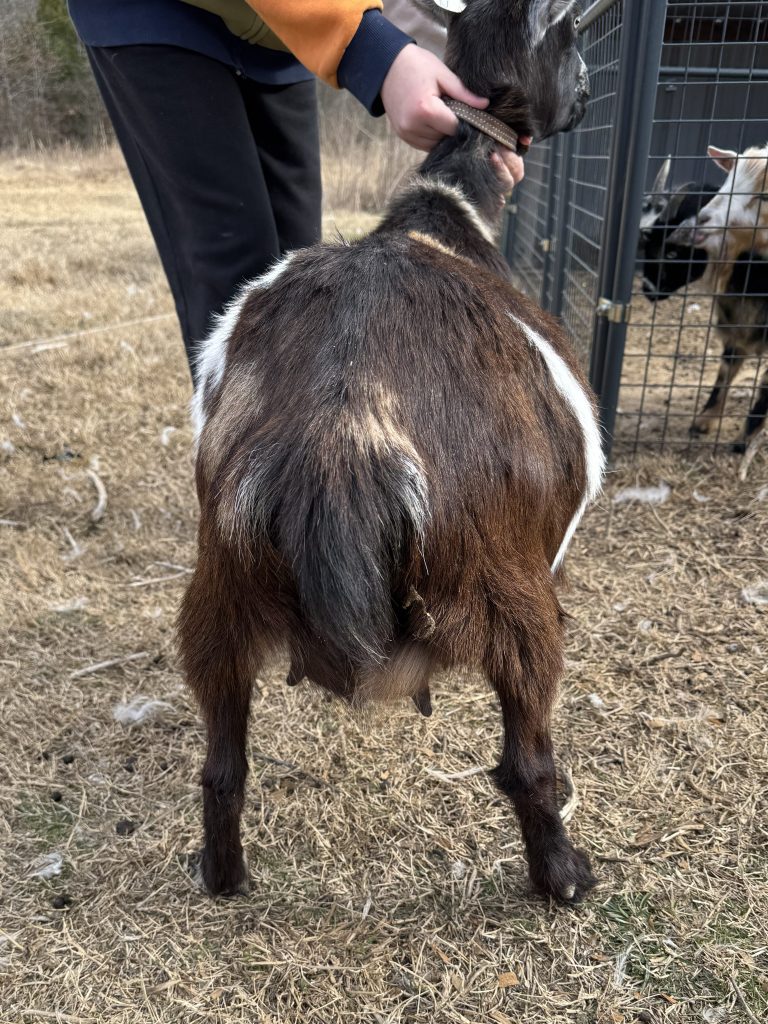
How Long Are Goats Pregnant?
Goats are pregnant for about 150 days.
That’s the general rule, but goats don’t pay much attention to calendars. Most will kid somewhere between 145 and 155 days after breeding.
If you know the breeding date, go ahead and mark it, but think of it as a window rather than a set due date. Just like human babies, goats rarely give birth on their exact due date.
Early Pregnancy: The “Is This Even Real?” Stage
Early on, pregnancy is quiet.
You might notice:
- She doesn’t come back into heat
- She eats a little more
- She’s calmer… or sometimes grumpier
- She slowly starts to fill out
But many does don’t show much at all in the beginning, especially first-time moms. This is the stage where you’re most likely to second-guess yourself.
That’s normal.
Mid-Pregnancy: When It Becomes Clear
This is when things start to look more obvious.
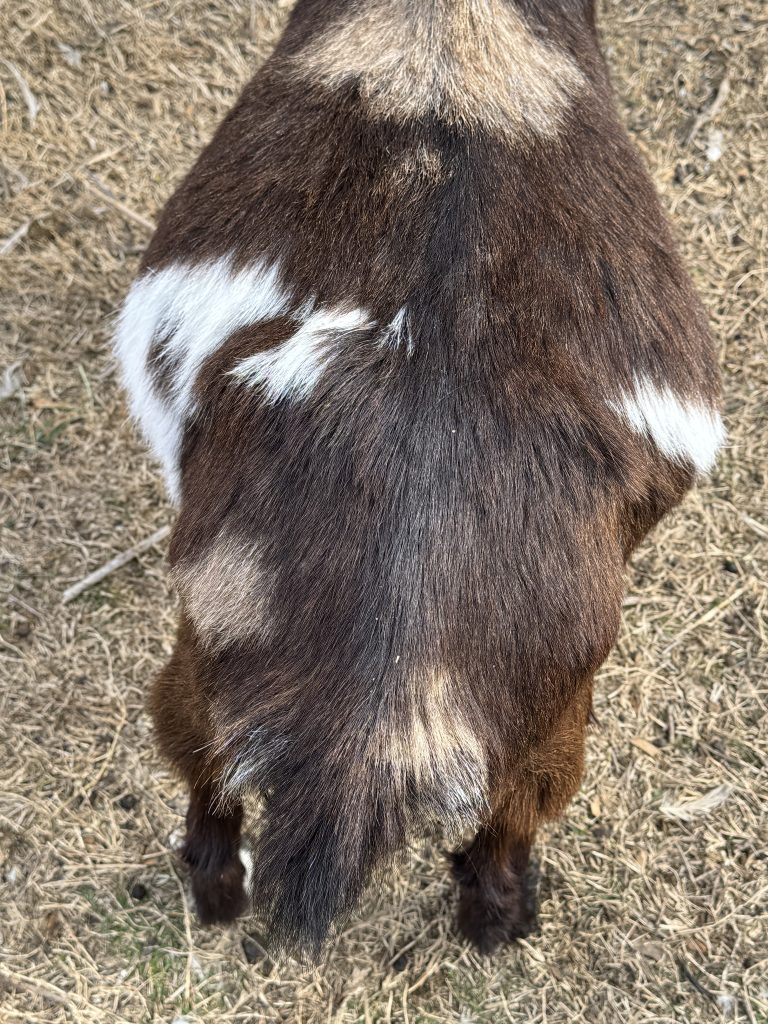
Her belly begins to round out, often more on the right side. That’s because the rumen takes up most of the left side, while the growing uterus tends to push outward on the right. She starts looking solid instead of fluffy, and you’ll usually notice she rests more and moves with a little less bounce than before.
If she’s carrying multiples (which is very common), her belly can grow surprisingly wide. Experienced moms often show sooner than first fresheners.
At this stage, you can tell she’s pregnant, but you’re not close to labor yet.
Late Pregnancy: When You Start Checking Constantly
The last month or so is when it’s time to pay closer attention.
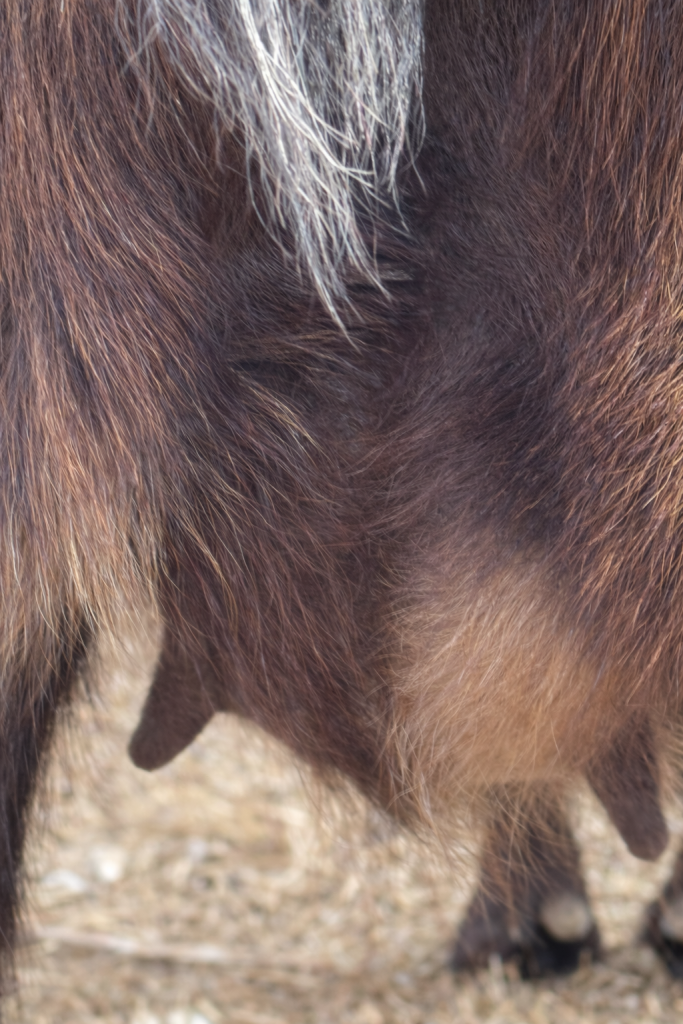
Udder Development (Bagging Up)
Most does begin developing an udder in the final weeks:
- First-time moms often bag up slowly
- Experienced does can fill fast
- Teats become more defined
- The udder feels fuller and firmer
Some goats don’t fully bag until after kidding, so this isn’t a perfect indicator, but it’s helpful context.
Belly Drop
As kids move into position, her belly often looks like it drops lower. Her back end may appear more hollowed out, and her belly hangs heavier than before.
This usually happens in the last week or so.
Ligaments
If I had to pick one sign that helps me the most, this would be it.
On either side of the tail head are two ligaments.
- Normally, they feel firm, like pencils
- As labor gets closer, they soften
- Right before kidding, they can feel almost gone
When those ligaments disappear, it’s time to start paying very close attention. Labor is often within 12–48 hours at that point.
Vulva Changes & Discharge
As her body prepares:
- The vulva becomes longer and looser
- You may see clear or cloudy mucus
- Stringy discharge often means things are moving along
This is her body doing exactly what it’s supposed to do.
Behavior Changes
In the day or two before labor, many does change their behavior.
You might see:
- Restlessness or pacing
- Pawing at bedding
- Standing up and lying down repeatedly
- Talking more… or going very quiet
- Separating from the herd
- Nesting behavior
Some want privacy. Some want reassurance. Both are normal.
At this stage, it’s important to watch the goat, not the clock.
When Labor Actually Starts
Once active labor begins, things usually move along steadily.
Common signs include:
- Strong contractions
- Vocalizing with effort
- Tail lifting
- Pushing
- A visible water bag or feet
Once pushing starts, kids are often born within 30 minutes to an hour, though every goat has her own pace.
A Gentle Word From Experience
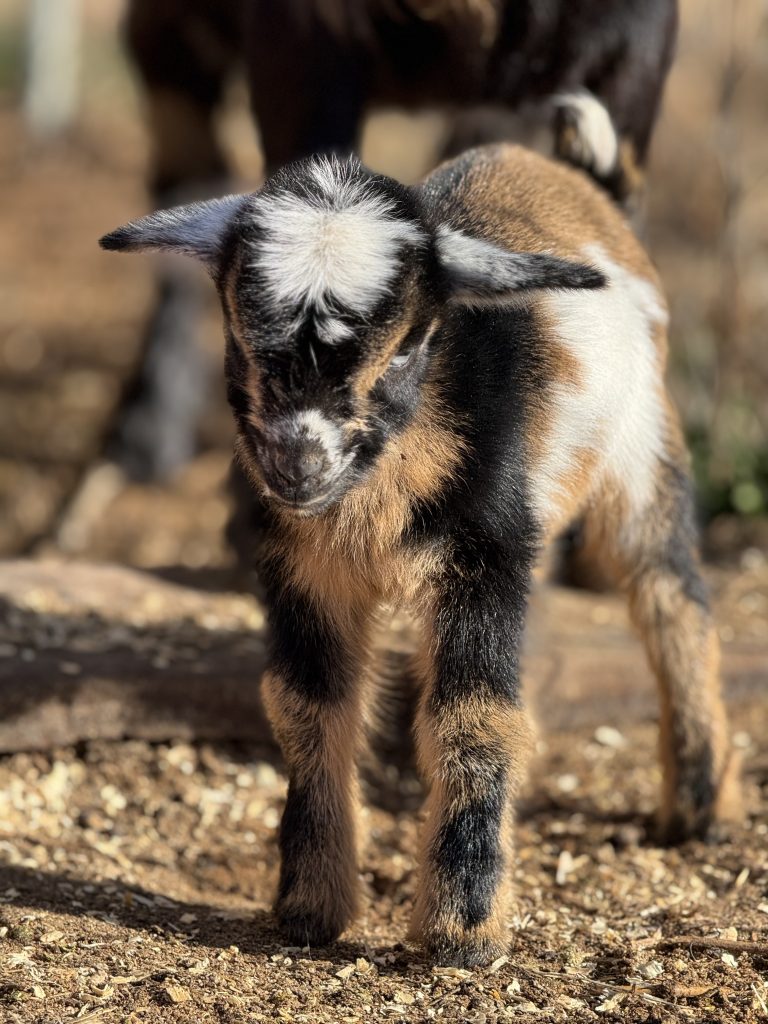
Most goat births go beautifully.
But I want to say this gently and honestly: sometimes they don’t. Even when you do everything right. Even when you watch closely. Even when you care deeply.
Being prepared doesn’t mean you won’t feel the weight of it; it means you’re better equipped to walk through it with calm and clarity.
Trust your instincts. Know your goat. And don’t hesitate to ask for help if something doesn’t feel right.
Final Thoughts
Goat pregnancy is a season of watching, waiting, and learning.
You’ll check her ligaments too often.
You’ll reread your notes.
You’ll convince yourself she’s close… and then wait some more.
That’s part of it.
Paying this much attention is how you learn, and it’s how confidence comes with time.
After kidding, one of the next learning curves for many families is milking. If you’re new to it, you might find it helpful to read about Taylor’s first experience milking her goat and what surprised her along the way.